Choose a language
EVE attaches great importance to your personal privacy. When you visit our website, please agree to the use of all cookies. More information about the processing of personal data can be found at Privacy Notice
Choose a language

.png)

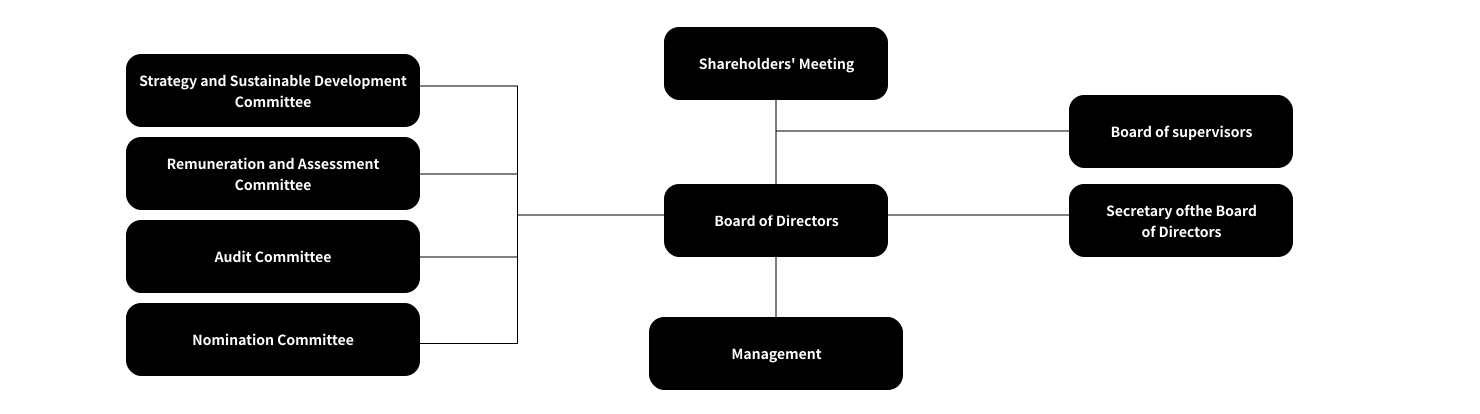
EVE Energy has established a legally constituted Board of Directors and sustainable development governance framework, building a comprehensive business ethics and risk management system to ensure compliant operations.
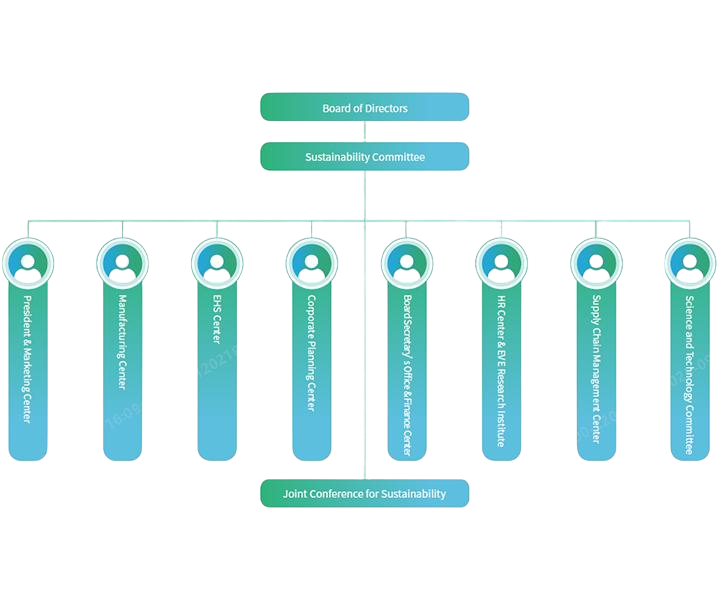
We have established a three-tier sustainable development governance framework comprising the Board of Directors, the Strategy and Sustainability Development Committee, and the Sustainable Development Joint Working Conference,forming a “decision-making – planning – executive” mechanism.
Decision-making Level
Planning Level
Execution Level
The Board of Directors, as the highest decision-making body, is responsible for reviewing the Company’s annual sustainability report and key sustainability topics.
The Strategy and Sustainability Development Committee has been set up, chaired by the chairman, with president and vice presidents overseeing manufacturing, EHS, corporate planning, Board Secretary’s Office and Finance Center, human resources and EVE Research Institute, supply chain, and R&D as committee members. The Committee is responsible for formulating and reviewing the Company’s sustainability goals and roadmap, as well as reporting major sustainability matters to the Board.
The executive body of the Committee is the Joint Conference for Sustainability, with committee members serving as chair persons on a rotating basis, along with representatives from various business and functional departments. It formulates and implements specific plans to achieve the Company’s sustainability goals, reports quarterly to the Sustainability Committee on ESG-related risks, work progress, and performance metrics, and proposes and implements corrective measures as needed. The ESG Dual-Carbon Department, as the leading execution department, is responsible for ESG rating supervision and issue improvement, coordinating the implementation of sustainable development strategies and targets, and supervising the ESG performance of ESG-related departments.



The company’s compliance management department focuses on key areas such as export controls/economic sanctions, supply chain traceability, and cross-border data transmission, collaborating with various departments to maintain and implement the compliance system. The company has issued the “EVE Energy Code of Business Conduct”, covering ten categories of basic and targeted guidelines, and comprehensively explaining compliance requirements from 21 dimensions including anti-corruption, anti-monopoly, intellectual property protection, labor rights, sustainable development, etc., and requires all employees and related parties to strictly adhere to these guidelines and collaboratively develop supporting procedures and implementation guidance to ensure their execution.

The Board of Directors serves as the highest responsible body for business ethics, the Audit Committee oversees and evaluates, and the Audit and Supervision Department is responsible for revising policies, supervising implementation, and investigating and punishing fraud. The company has improved its anti-fraud systems, conducted company-wide audits every three years, and regularly carried out integrity training to cultivate a clean and upright culture.

The company strictly follows ISO 31000 and the Risk Management Guidelines for Central State-Owned Enterprises to build a complete risk management system. In accordance with the “Risk Management Policy”, all business units promptly formulate and execute risk control plans under the supervision of the risk management department. This department orchestrates organization-wide risk control processes, conducts risk assessments across finance, operations, and compliance domains for both headquarters and subsidiaries, and dynamically monitors risk mitigation implementation through a tiered checklist.